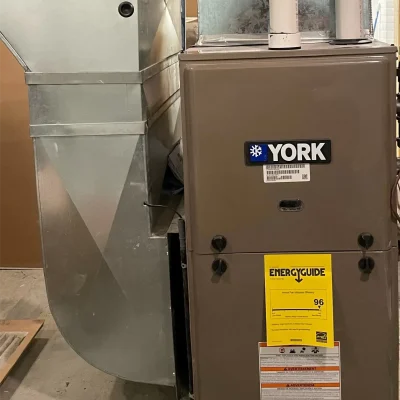
In Norfolk County, a heating and cooling system must handle more than a design temperature. It sees damp lake air, hot afternoons, sudden cold snaps, shoulder seasons and homes that range from tight new construction to drafty farmhouses. Good comfort planning starts by treating the house and the equipment as one system.
Measure before choosing equipment
Bigger is not automatically better. Oversized equipment can cycle too quickly, create uneven temperatures and do a poor job of managing summer humidity. Ask for a heat-loss and heat-gain calculation based on the home’s size, insulation, windows, air leakage and orientation. Natural Resources Canada’s heating-and-cooling guide explains why sizing, distribution and supplementary heat belong in the same conversation. For an addition or major renovation, update the calculation after envelope improvements are defined.
Airflow deserves the same attention. A high-performance furnace, air conditioner or heat pump cannot fix undersized returns, blocked registers or disconnected ductwork. Rooms that are consistently uncomfortable often reveal distribution problems rather than a lack of raw capacity.
Understand the heat-pump conversation
Modern heat pumps can provide both heating and cooling in Canadian conditions, but selection matters. Homeowners should ask how a proposed model performs at lower outdoor temperatures, what supplementary heat is planned, how controls switch between systems and what the projected operating costs assume.
Some homes are well suited to an all-electric approach; others may use a hybrid setup. The answer depends on the building, electrical service, existing distribution, comfort priorities and budget. Prologic Comfort Solutions is a locally based reference point for furnace, boiler, air conditioning, gas-line and commercial HVAC work across Norfolk County and Southern Ontario.
Fix the envelope where it counts
Air sealing and insulation can reduce the load the mechanical system must carry. Start with obvious leakage paths, accessible attics and poorly sealed penetrations. Windows and doors are part of the conversation, but replacement is not always the first or most cost-effective move. The federal home-retrofit guide and Ontario’s smart energy choices overview can help frame a whole-home assessment and rank the work.
Humidity also needs a plan. Confirm bath and kitchen exhaust routes, dryer venting, condensate drainage and whether basement conditions are contributing moisture. Comfort is often better when the system runs longer at a lower, steadier output rather than blasting on and off.
Plan for service, not just installation
Ask where filters will be changed, how outdoor equipment will stay clear of snow and debris, and what maintenance the manufacturer requires. Record model and serial numbers, warranty information and control settings. The result should be a system the household can understand—not a mysterious box that only gets attention when it stops.
Useful references
Rules and programs change. Confirm current requirements with the responsible agency before making project decisions.